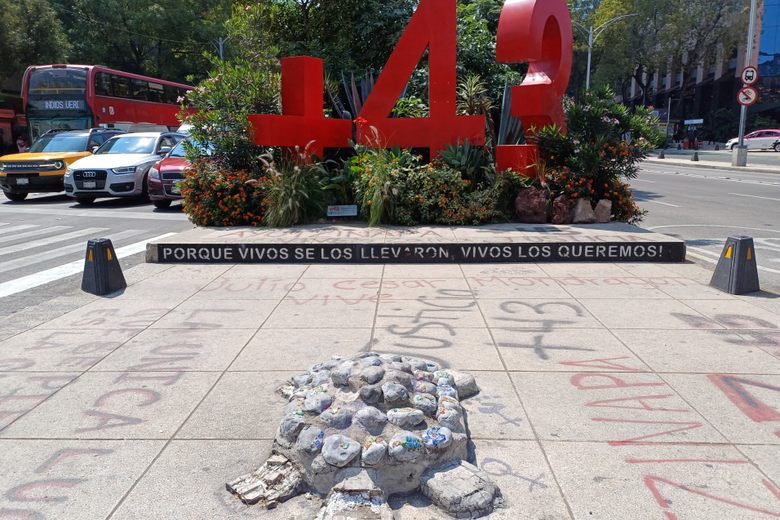
Antimonumentas and Antimonumentos in Mexico City, Mexico
Considering that Mexican cities have been ranked among the ones with highest homicide rates, a large number of massacres committed by organized crime groups as well as human rights violations by authorities, the last century or so has been rough for Mexico. In this context, the country's civilian population has often taken matters into their own hands regarding self-defense and demands towards the government. This is where the multitude of antimonuments mainly found in the capital come in. Unlike a monument intended to celebrate a particular event, the antimonumentos aim to confront the powers that be (and even the society at large) for failures in the rule of law, corruption, negligence, among others. From the 1968 state-sponsored Tlatelolco Massacre in the eve of the Mexico City Olympics, to the similar Halconazo of 1971 and the 2021 removal of a statue of Christopher Columbus, the antimonuments represent more than half a century of struggle. The former Glorieta de Colón (Columbus Roundabout) represents one of the best examples of how antimonumentos and specifially, their feminist antimonumenta counterparts, come to be. After the Columbus statue was toppled during a protest agai…