rillr
About Guidelines Privacy Terms Log in Join Rillr
Rillr / Topic

Programming

Latest stories and discussion in Programming.

Elevators, toasters, and the birth of Java

Ryan sits down with James Gosling, creator of Java at Sun Microsystems, to talk about the early networking friction that drove the need for interconnectedness, the stringent reliability requirements of consumer electronics companies that inspired the Java virtual machine, and the evolution of garbage collectors that allow Java to handle large-scale concurrent memory management.


💬 0 ↗ source

Java News Roundup: JDK 28 Schedule, Oracle CPUs, eMudhra Certs, Apache POI, WildFly, Azul, BellSoft

This week's Java roundup for October 19th, 2026, features news highlighting: the proposed release schedule for JDK 28; the eMudhra Intermediate CA certificates breach; the October 2026 Critical Patch Update; Azul and BellSoft CPUs; GA releases of WildFly 42 and Apache POI 6.0; the beta release of Open Liberty 26.0.0.11; and maintenance releases of Micronaut and JobRunr. By Michael Redlich

💬 0 ↗ source

Readyon Builds Four Layer Tenant Isolation for Multi Tenant Amazon EKS

ReadyOn has detailed a four-layer tenant isolation architecture for its Harmony platform on Amazon EKS. The design combines Kubernetes namespaces, dedicated Karpenter node pools, VPC security groups, and per-tenant Aurora databases, with controls evaluated against a 10-stage multi-tenant threat model focused on cross-tenant access and lateral movement. By Leela Kumili

💬 0 ↗ source

Cloudflare’s Auto Router Rates Each Request for Stakes, from the Most Recent Turns

Cloudflare has released Auto Router in public beta through AI Gateway, picking a model per request from a classifier that scores complexity, ambiguity, stakes and context dependence. Cloudflare’s own benchmark puts it ten points below Claude Opus 5.5 on success rate at a third of the cost, and practitioners have questioned how stakes survive a long agent session. By Steef-Jan Wiggers

💬 0 ↗ source

MCP C# SDK 2.0 Makes HTTP Stateless by Default and Adds Multi Round-Trip Requests

Microsoft announced version 2.0 of the official MCP C# SDK, which implements the 2026-07-28 revision of the Model Context Protocol with stateless HTTP servers by default, standardised routing headers and Multi Round-Trip Requests. Releases 2.1 to 2.3 have since added hybrid session serving, a subscriptions/listen handler and a series of discovery, OAuth and shutdown fixes. By Edin Kapić

💬 0 ↗ source

PingCAP Breach Exposes Customer Records and Source Code

PingCAP recently confirmed unauthorized access to its internal systems and the theft of source code and customer-related data. The attacker, cyber extortion group FulcrumSec, claimed to have stolen 10.6 TB of data, including TiDB Cloud control-plane records, customer SQL statements, API keys, connection logs, billing information, internal documents, and 413 private source-code repositories. By Renato Losio

💬 0 ↗ source

Google’s Data Agent Kit Hits GA, Splitting Agent Guardrails Between Skills and IAM

Google has made Data Agent Kit generally available, a free set of MCP tools and 37 open-source skills that connect coding agents to more than fifteen Google Data Cloud services. Two kinds of guardrail ship with it, and practitioners need to tell them apart: one is a skill asking the agent to stop, the other an IAM deny policy that refuses the call. By Steef-Jan Wiggers

💬 0 ↗ source

Cloudflare Reclaims 100 TB of RAM by Optimizing Consistent Hashing

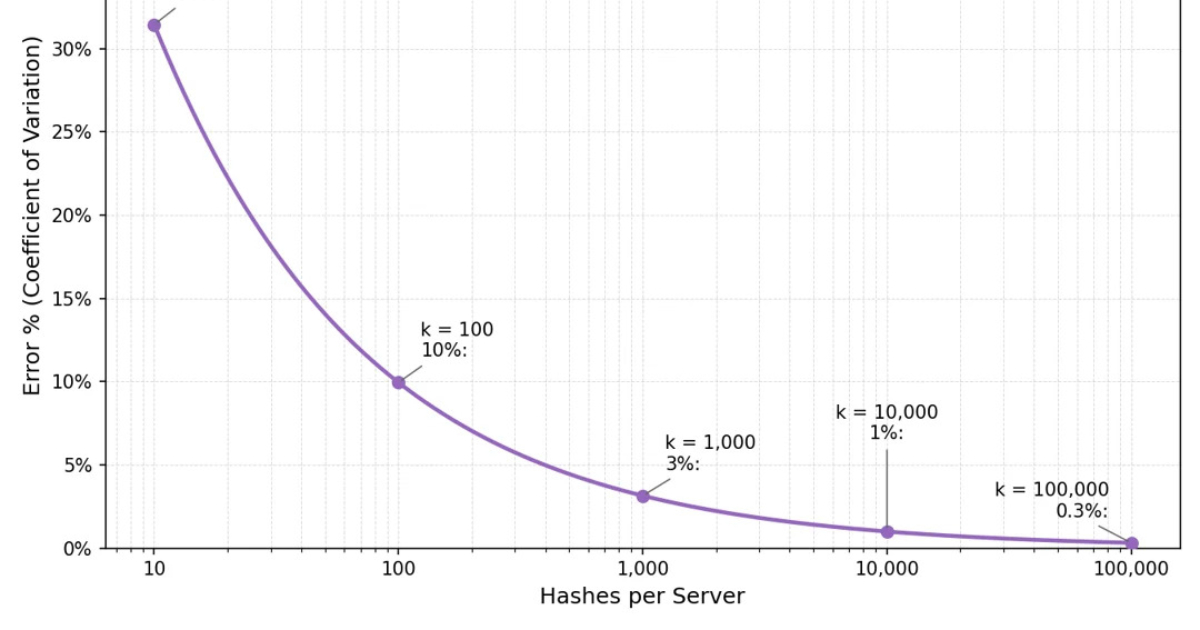
Cloudflare recently documented how it reduced the memory footprint of its internal load-balancing service by more than 100 TB by optimizing the Rust implementation of consistent hashing in pingora-ketama. The changes compacted hash-ring entries and used statistical analysis of hash distribution and collision rates to reduce the number of hashes per backend by about 90%. By Renato Losio

💬 0 ↗ source

CSIRO Uses Serverless Architecture to Query 100x More Genomic Variants on AWS

CSIRO has developed Serverless Beacon, a serverless architecture for querying genomic variants without copying VCF files into a central database. The system combines Amazon S3, Lambda, Athena and DynamoDB, using metadata indexes and HTTP byte range requests to query compressed genomic regions. Tests reported 1.52 second average latency for 10,000 base pair queries. By Leela Kumili

💬 0 ↗ source
Loading more stories…